

Foam pricing has been elevated since 2023 and has not meaningfully corrected. If you have not adjusted your material rates in the past two years, you have been absorbing this on behalf of your clients.
What Is Driving the Increases
Polyurethane foam is a petroleum-derived product, which ties it to crude oil prices. But the current situation is not purely commodity-driven.
MDI and TDI are the two isocyanates that form the backbone of polyurethane foam. A small number of chemical plants supply most of North American production. Unplanned outages and reduced capacity at several of those facilities have tightened supply without a comparable drop in demand. That combination pushes prices up fast and keeps them there.
Transportation and energy costs have added to this. Carrier rates from the supply chain disruptions of the early 2020s have not fully normalized.
Distributor behaviour has compounded the problem. When prices are rising, distributors reduce inventory to avoid holding high-cost material that might drop in value. That squeezes availability further.
What Grade to Buy
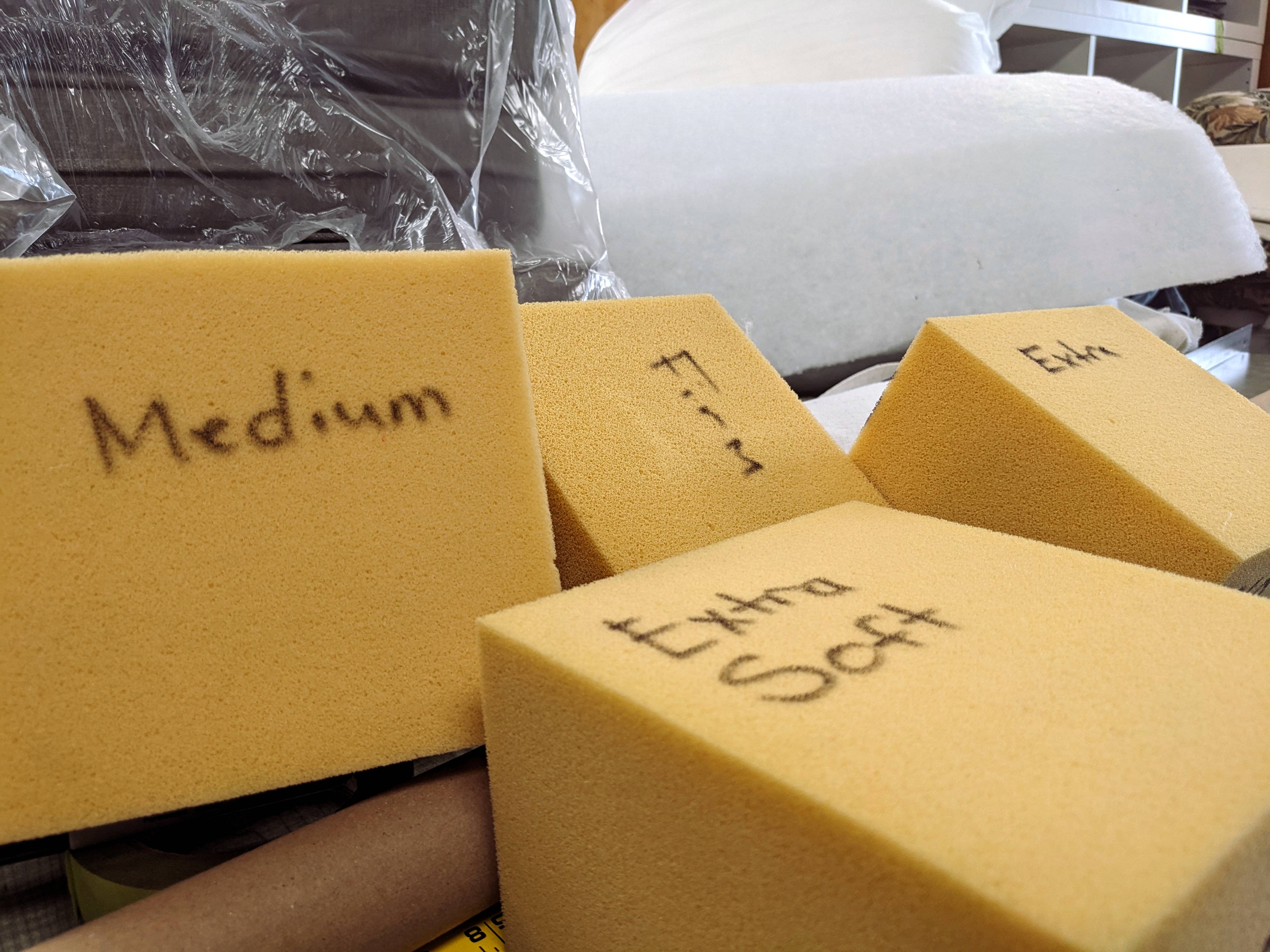
The Guild’s standard is 3 lb density (gold foam) across the board. Not because it is the cheapest option that passes muster, but because the math over a job’s lifetime makes it the only sensible one.
White foam, which runs cheaper and is common in volume shops, has a useful life of roughly two to three years in residential seating before it breaks down, compresses permanently, and reflects badly on whoever did the job. Gold foam at 3 lb lasts two decades or more under normal use. The material cost difference between the two does not come close to covering the reputational and warranty cost of work that fails in year three.
Shops that spec lower grades to reduce quote prices are competing on the wrong variable. The client who calls back five years later to say the cushions still feel like new is worth more than the one you undercut a competitor for once.
Protecting Your Margins
Buy ahead when pricing dips. Standard foam cuts stored in a dry, climate-controlled space hold well for months. When distributor pricing comes down, stock up on your most-used specs.
Pass costs through. The upholstery market is not heavily commoditized in most regions. If your material costs have climbed significantly over two years and your rates have not moved, you are subsidizing your clients’ expectations with your margin.
Outlook
No distributor consensus on when pricing will stabilize at a lower level. MDI capacity expansion is expected in the next 18 to 24 months, which should ease one input pressure. Energy and logistics costs remain variable. Conservative assumption: current pricing persists through 2026.
Guild members who want to compare pricing against regional benchmarks are welcome to reach out. We maintain informal pricing surveys through the member network.